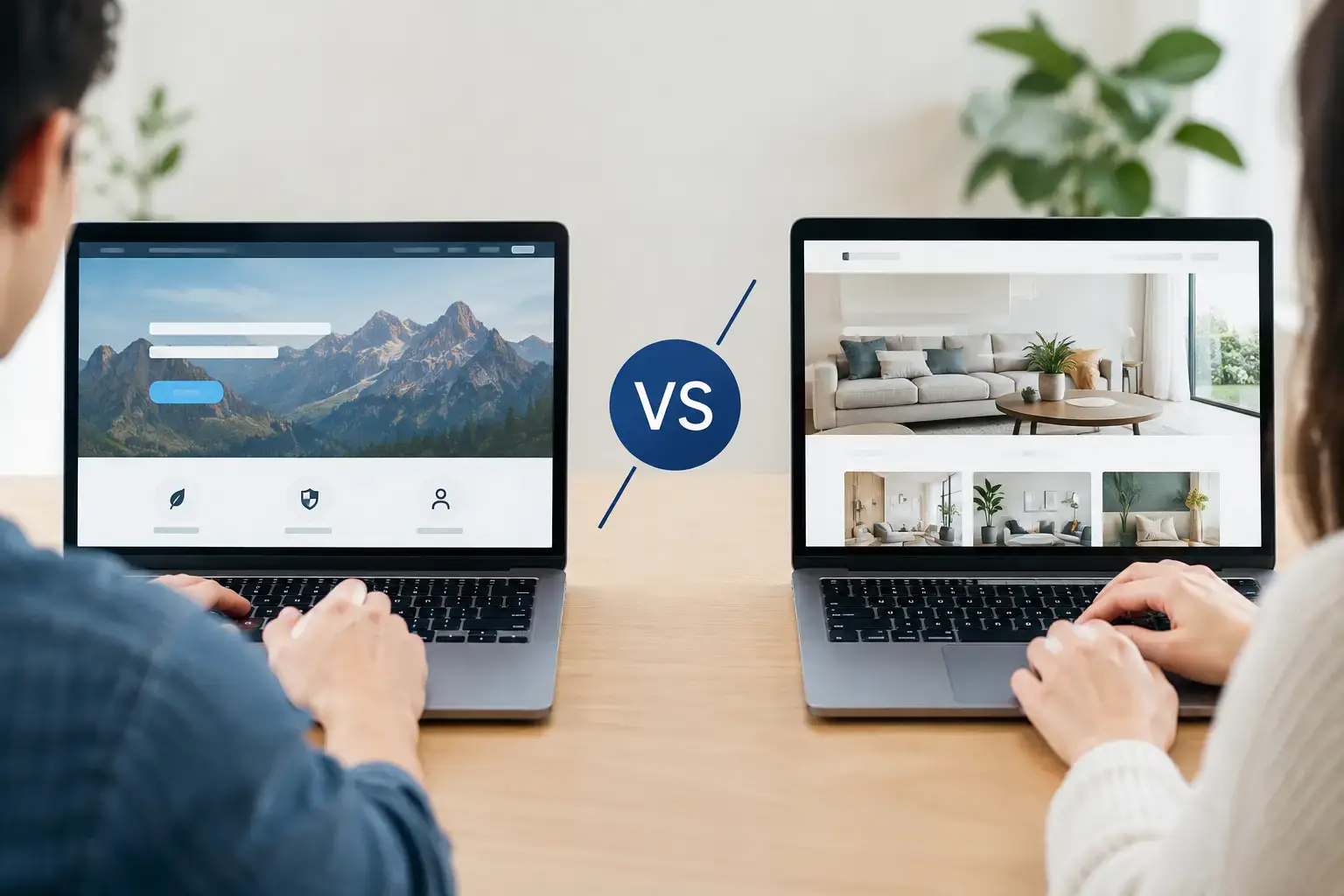

A missed website deadline, a campaign with no clear reporting, and three different vendors blaming one another can cost more than a monthly marketing fee. That is why the freelancer vs marketing agency decision is not simply about finding the lowest rate. It is about choosing the level of strategy, execution, and accountability your business needs to grow.
For a small or midsize business, either option can be the right move. A skilled freelancer may solve a focused need quickly. A marketing agency can bring connected expertise across your website, search visibility, content, branding, and lead generation. The better choice depends on what is holding your growth back and how much coordination your business can realistically manage.
Freelancer vs Marketing Agency: The Core Difference
A freelancer is typically an independent specialist hired for a defined skill or deliverable. You might bring in a freelance web developer to update your website, an SEO consultant to complete a technical audit, or a designer to create a new logo. The relationship is often direct, flexible, and centered on one person’s expertise.
A marketing agency brings a coordinated team and an operating system for marketing work. Instead of hiring separate providers for messaging, website design, SEO, paid media, and content, you work with one partner responsible for aligning those efforts around business outcomes.
That distinction matters when your marketing challenges overlap. A website that does not generate leads may have a design issue, a messaging issue, a search visibility issue, or all three. Hiring one person for one task can produce a cleaner page. Building a conversion-ready digital presence requires the right strategy behind the page, the technical execution to support it, and ongoing optimization after launch.
When a Freelancer Is the Smarter Choice
Freelancers are a strong fit when your project has a narrow scope, a clear brief, and a well-defined finish line. If your business already has a marketing strategy and internal leadership, a specialist can add valuable capacity without the commitment of a larger engagement.
For example, a local professional services firm with an established brand may only need a photographer, a copywriter for a quarterly campaign, or a developer to fix a specific website issue. In those cases, a freelancer can be efficient and cost-conscious.
The freelancer model also works well when speed matters and the work does not rely on several disciplines moving together. A talented specialist can often begin quickly, communicate directly, and make decisions without layers of process.
The trade-off is dependency. One person has limited hours, limited coverage during time off, and a finite range of expertise. Even excellent freelancers may need to outsource pieces of the work, which can add complexity behind the scenes. If they become unavailable during a critical launch or growth period, the project can lose momentum.
Freelancers also need direction. Someone on your team must define priorities, approve work, connect the freelancer with other vendors, and make sure individual projects support the larger business goal. If your organization has a capable marketing manager, that may be easy. If marketing already feels fragmented, adding another independent contributor can make coordination harder.
When a Marketing Agency Creates More Value
An agency is usually the better choice when marketing is tied directly to revenue goals and multiple channels need to work together. This is especially true for businesses that need a stronger brand, a better website, higher search rankings, and a dependable flow of qualified leads rather than a single deliverable.
A full-service agency can connect the dots. Brand positioning informs website messaging. Website structure supports SEO. SEO content builds authority and attracts relevant traffic. Conversion tracking shows what is producing leads and where the customer journey needs improvement. The work is not treated as a set of disconnected tasks.
This coordinated approach is valuable for companies that have outgrown reactive marketing. If your website looks dated, your Google visibility is weak, and your sales team says leads are inconsistent, the issue is rarely solved by one isolated project. You need a plan that prioritizes the highest-impact opportunities, assigns ownership, and measures progress against real business goals.
With an agency, you are also paying for continuity. There is typically a project manager or account lead, documented processes, access to multiple specialists, and a team that can maintain momentum when priorities shift. That structure helps reduce the risk of a project stalling because one person is overloaded or unavailable.
The strongest agency relationships are not built on flashy deliverables alone. They are built on ownership. Your partner should ask what success looks like, identify the obstacles between your current position and that goal, and show how each initiative supports measurable progress.
Cost Is More Than the Monthly Rate
It is tempting to compare a freelancer’s hourly rate with an agency retainer and stop there. But the lowest upfront price does not always create the lowest total cost.
A freelancer can be less expensive for a contained project because you are paying for a single skill. An agency costs more when it provides strategy, design, development, SEO, content, reporting, and management. Yet the agency may reduce the hidden cost of managing multiple vendors, correcting disconnected work, or rebuilding assets that were created without a growth strategy.
Consider the true operational burden. Who will write the brief? Who will set priorities? Who will review performance data? Who will make sure your website developer, content writer, and SEO provider are not working at cross-purposes? If those responsibilities fall on a busy owner or operations leader, the apparent savings can disappear quickly.
A useful question is not, “Which option is cheaper?” Ask, “Which option gives us the best chance of reaching the outcome we need?” If you need a new landing page, a freelancer may deliver excellent value. If you need that landing page to support a broader campaign, capture leads correctly, reflect your brand, and improve over time, an agency may be the more efficient investment.
The Accountability Test
Before you hire either a freelancer or an agency, look beyond portfolios and promises. Ask how they define success, communicate progress, and respond when results are not where they should be.
A capable freelancer should be clear about scope, timelines, dependencies, revisions, and what they need from your team. A capable agency should bring the same clarity at a larger scale, including strategic priorities, reporting cadence, ownership across disciplines, and how optimization decisions will be made.
Watch for vague language. “More traffic” sounds positive, but it is not a business objective without context. More of the right traffic, stronger conversion rates, more qualified calls, booked consultations, or lower cost per lead are objectives that can guide action.
Also ask what happens after launch. A website is not finished because it is live. SEO is not finished because an audit is complete. Brand work is not finished because a logo file was delivered. Digital growth requires measurement, refinement, and a partner who treats performance as an ongoing responsibility.
How to Choose the Right Partner for Your Next Stage
Start with the problem you are actually trying to solve. If you can state the project in one sentence and the work requires one specialized capability, a freelancer may be ideal. If your answer includes several connected issues, such as weak positioning, low website conversions, inconsistent content, and poor search rankings, an agency is likely the better fit.
Next, assess internal capacity. Businesses with an experienced marketing leader can often coordinate freelancers effectively. Businesses without that leadership usually benefit from an agency that can provide direction as well as execution.
Finally, match the partner to the stakes. A short-term design task and a company-wide growth initiative should not be staffed the same way. The more revenue, reputation, and long-term visibility depend on the work, the more valuable integrated strategy and reliable accountability become.
WiseX3 works with businesses that are ready to move beyond scattered marketing efforts and build digital momentum with purpose. The goal is not to sell activity for activity’s sake. It is to turn your brand, website, content, and search visibility into a clearer path toward measurable growth.
Choose the partner that gives your business more than completed tasks. Choose the one that can take responsibility for the next result you need to create.