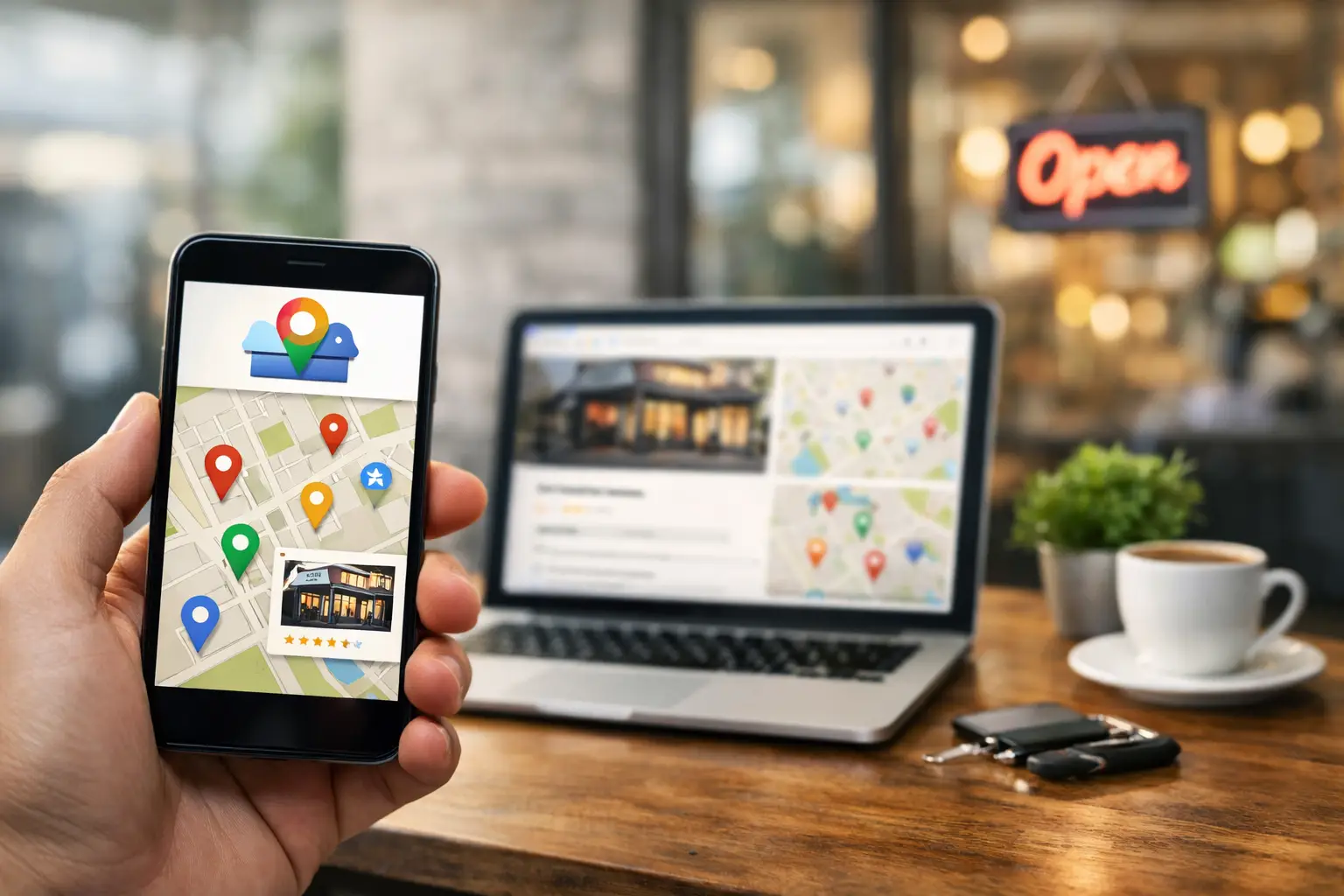
When a potential customer searches for a plumber, law firm, clinic, contractor, or local retailer, they are not looking for a marketing strategy. They are looking for a business they can trust right now. Your Google Business Profile is often the first place that decision happens – before they visit your website, call your office, or request a quote.
For local and service-based businesses, this profile is not a side task for someone to update when there is time. It is a high-intent visibility asset. A complete, credible, actively managed profile can help put your business in front of people who are ready to take action. A neglected one can send them directly to a competitor with better photos, stronger reviews, and clearer information.
Why Google Business Profile Matters for Growth
Google uses local signals to determine which businesses appear in map results and local search listings. Relevance, distance, and prominence all play a role. You cannot control where a searcher is standing, but you can make your business more relevant and more credible.
That is where profile quality matters. Your categories, services, business description, photos, reviews, hours, and recent activity all help customers and search engines understand what you do. More importantly, they shape whether a customer feels confident enough to call.
The goal is not simply to “show up on Google.” The goal is to show up with a listing that makes the next step easy. A strong profile supports calls, direction requests, website visits, appointment bookings, and quote inquiries. It also reinforces the polished, dependable brand experience your website and broader marketing should already deliver.
For a Houston business competing in a crowded market, that clarity can be the difference between another overlooked search impression and a qualified lead.
Build a Google Business Profile That Converts
Start with the foundation. Claim and verify the profile under an account your company controls. Avoid building a critical business asset around a former employee’s personal login, a vendor account you cannot access, or an email address no one monitors. Ownership is not glamorous, but it prevents real problems when teams change or marketing priorities shift.
Your business name should match the name customers see on your signage, website, and official materials. Do not add keyword strings or city names to force relevance. It may look tempting, but inaccurate naming can create trust issues and put the profile at risk of suspension.
Next, select the primary category that most closely represents your core business. This is one of the most meaningful choices in the entire setup. A family law firm should not choose a broad category simply because it sounds more expansive. A roofing company should not dilute its relevance by positioning itself as every kind of home service provider. Choose the service that drives the business, then add secondary categories only when they accurately reflect meaningful offerings.
Your description should be direct and customer-focused. Explain what you do, who you serve, and what makes your approach valuable. This is not the place for a vague mission statement or a wall of keywords. A prospect should be able to scan it and understand why they should contact you.
Make sure the basics are accurate: phone number, website, hours, holiday hours, address, service area, and available service options. Small errors have large consequences. A customer who arrives to find a locked door during posted business hours may not give you another chance.
Choose the right location model
The right setup depends on how customers interact with your business. If clients visit a staffed, customer-facing location during stated hours, use the physical address. If you travel to customers and do not serve them from a storefront, use a service-area setup and keep your address private.
Do not create multiple profiles for the same business just to target nearby cities. That can create duplicate listings, confuse customers, and complicate management. Businesses with legitimate, separately staffed locations can build individual profiles, but each one needs accurate local information and a real operational presence.
Give Customers Proof Before They Call
A search listing with a logo and two blurry photos does not inspire confidence. Visual proof matters because customers are assessing your professionalism in seconds.
Use high-quality photos that show the reality of your business: your exterior signage if you have a storefront, your team, vehicles, products, completed projects, office environment, and work in progress. For professional services, clean team photos and a credible office setting can make the experience feel more personal. For contractors and home service companies, before-and-after project photos can provide immediate evidence of capability.
Keep visuals current. If your branding, location, staff, or service offering changes, your profile should reflect it. Consistency across your profile, website, social channels, and sales materials strengthens recognition. A sharp brand is not just about appearance. It tells customers your business is organized, active, and accountable.
Reviews provide another layer of proof. They can influence local visibility, but their greater value is conversion. A thoughtful review from a real customer can answer the questions a prospect has not yet asked: Did the company communicate well? Did they arrive on time? Was the work completed properly? Did the customer feel taken care of?
Create a simple review-request process after a positive customer outcome. Ask at the right moment, make the request easy, and never pressure customers or offer incentives in exchange for reviews. The most sustainable review strategy is excellent service followed by a clear, respectful ask.
Respond to reviews consistently. Thank positive reviewers with a genuine response that reflects your brand. Handle negative feedback calmly, professionally, and without exposing private details. A defensive response may cost more business than the original complaint. A measured response can demonstrate ownership and give future customers confidence in how you handle problems.
Turn Profile Activity Into Better Lead Quality
An optimized profile is not a one-time project. It needs regular attention, especially in competitive local categories.
Use updates to highlight timely offers, completed work, new services, seasonal reminders, community involvement, or useful customer information. The purpose is not to publish for the sake of activity. It is to give searchers a reason to see your business as current, capable, and relevant.
Review your services and attributes periodically. If you add a specialty, change your process, launch online scheduling, or expand into a new legitimate service area, update the profile. If a service is no longer available, remove it. Marketing works best when the promise and the operational reality match.
Questions and answers also deserve attention. Customers may ask about pricing ranges, availability, accessibility, service boundaries, or appointment requirements. Answer clearly and promptly. If you see the same question repeatedly, that is a signal to improve your profile, website, or sales process.
The trade-off is time. Business owners often know this work matters but do not have the capacity to monitor updates, reviews, photos, local rankings, and website conversion paths every week. That is where a coordinated marketing partner can bring structure. WiseX3 approaches local visibility as part of the larger customer journey: clear positioning, conversion-ready web experiences, search optimization, and ongoing performance improvements working toward measurable results.
Measure What Happens After Visibility
Ranking alone is not the finish line. A profile that appears often but produces irrelevant calls is not doing its job. Track the actions that matter to your business: phone calls, website visits, direction requests, appointment actions, messages where available, and leads that become paying customers.
Look for patterns. Are certain services generating more calls? Are customers searching for terms your profile does not clearly address? Does a spike in visibility align with a seasonal campaign or an influx of new reviews? Are leads calling after business hours because they cannot find a clear way to book online?
These answers help you make smarter decisions beyond the profile itself. You may need a more focused service page, better call tracking, revised business hours, stronger location content, or a more direct quote request path on your website. Your Google Business Profile should not operate in isolation. It should feed your broader growth strategy with real customer behavior.
Avoid chasing every ranking fluctuation. Local results change based on searcher location, competition, device, and query wording. Focus on trends over time and on outcomes your team can actually act on. More calls from the right customers will always matter more than a vanity position for one search term.
Keep the Profile Aligned With Your Business
The strongest local listings feel reliable because they are maintained. Set a monthly check to review hours, photos, service details, recent reviews, questions, and customer actions. Revisit categories and major content whenever your business changes direction. During busy seasons, increase the pace of updates rather than letting the profile go quiet.
Most local businesses do not need more marketing noise. They need their most visible customer touchpoints to work harder. Treat your profile like a digital front door: accurate, welcoming, persuasive, and ready when a high-intent customer arrives. The next local search could be a quick comparison, or it could be the beginning of a valuable customer relationship. Give that customer a clear reason to choose you.
By Calixto Armas