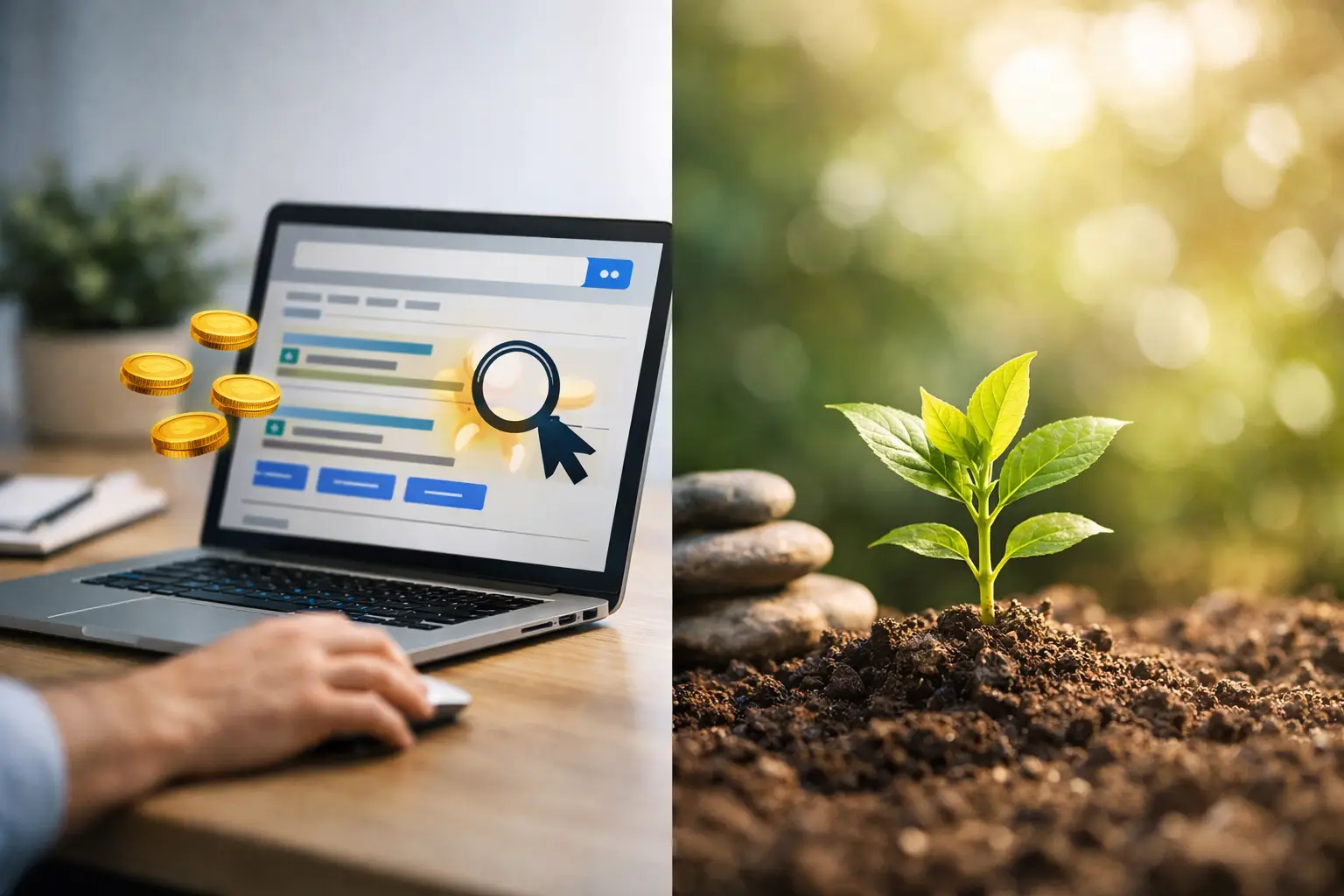
A Houston contractor needs calls this month. A growing B2B firm needs authority before a six-figure buyer will book a meeting. A local retailer needs to appear when shoppers search for products nearby. That is why ppc versus organic search is not a theoretical marketing debate. It is a budget, timing, and growth decision that affects how your business gets found.
Paid search can put your offer in front of high-intent prospects quickly. Organic search can build a durable presence that keeps earning attention after the initial work is done. The stronger question is not which channel wins. It is which channel should lead right now, and how both can work together to create measurable momentum.
PPC Versus Organic Search: The Core Difference
PPC, or pay-per-click advertising, places sponsored listings in search results. You select the keywords, define the audience, set the budget, and pay when someone clicks. With platforms such as Google Ads, your business can appear for searches that signal immediate buying intent, from “emergency plumber near me” to “commercial insurance quote.”
Organic search is the unpaid visibility your website earns in search engines. It comes from a combination of useful content, technically sound website development, relevant page structure, local optimization, trusted mentions, and a website experience that helps visitors take action. Search engine optimization does not charge for each click, but it does require consistent strategic investment.
The practical distinction is speed versus compounding value. PPC can generate visibility as soon as a campaign is approved. Organic search usually takes longer to build, especially in competitive markets, but an optimized service page or local landing page can keep attracting qualified visitors for months or years.
Neither channel is automatic. PPC without clear targeting can burn budget on clicks that never become leads. SEO without strong strategy can produce traffic that has little connection to revenue. Results come from aligning search intent, messaging, landing pages, and conversion paths.
When PPC Should Take the Lead
PPC is often the right first move when your business needs demand now. That might mean a new location opening, a limited-time offer, seasonal demand, an event, or a service line that needs immediate exposure. It is also valuable when your website has not yet earned meaningful organic rankings for high-value terms.
For many small and midsize businesses, paid search creates a fast feedback loop. You can see which phrases drive calls, form submissions, booked consultations, or online purchases. You can test headlines, offers, locations, and audience segments without waiting months for rankings to change.
That speed has a price. Competitive keywords can be expensive, particularly in legal, home services, healthcare, finance, and B2B professional services. A high click-through rate may look promising, but it is not the goal. The real measure is whether the campaign produces qualified leads at a cost that makes business sense.
PPC works best when the full experience is ready to convert. Sending paid visitors to a generic homepage is rarely the strongest use of budget. A focused landing page should match the searcher’s need, communicate a clear value proposition, build confidence quickly, and make the next step easy. For a service business, that may be a quote request, a call, or a consultation form. For ecommerce, it may be a product page with clear pricing, availability, and shipping details.
When Organic Search Creates the Bigger Advantage
Organic search earns its value over time. It gives your business the opportunity to own valuable search real estate without paying for every visit, while reinforcing that your brand is a credible answer to the customer’s question.
This matters for businesses with long sales cycles and buyers who research before contacting anyone. A prospect may search for a broad problem, compare approaches, look for local providers, review service pages, and return later through a branded search. Organic content and optimized web pages can support every stage of that journey.
SEO is especially powerful when your company has clear expertise that competitors have not explained well. A law firm can answer common client concerns. A manufacturing company can create detailed pages around capabilities and applications. A Houston-based service provider can build location-specific pages that speak directly to the markets it serves. The goal is not to publish content for the sake of publishing. The goal is to become visible for the questions that precede a buying decision.
Organic search also strengthens the asset you own: your website. Improvements to page speed, navigation, content quality, internal structure, and conversion design can help search performance while making every visitor more likely to engage. That carries value beyond search engines, including referral traffic, social campaigns, email marketing, and direct visits.
The trade-off is patience. New websites, low-authority domains, and highly competitive categories need time and consistent optimization. Businesses that treat SEO as a one-time project often miss the gains that come from monitoring results, refining pages, expanding content, and responding to shifts in search behavior.
The Most Effective Strategy Is Often Both
A high-performing search strategy does not force PPC and SEO into separate corners. It uses each channel to cover the other’s gaps.
Paid campaigns can reveal which search terms convert before you commit to a larger content or SEO initiative. If a keyword consistently generates qualified leads through PPC, it is a strong candidate for an organic service page, supporting content, or local SEO focus. PPC data can also expose the language real customers use, which may be different from the internal terms your team uses every day.
SEO can make paid campaigns more efficient, too. A relevant, well-built landing page improves the experience after the click and can support stronger ad performance. Organic visibility also reduces dependence on paid placements over time, giving your business more flexibility when ad costs rise or budgets need to shift.
Consider a regional accounting firm preparing for tax season. PPC can target urgent searches from business owners looking for immediate help. At the same time, organic content can address year-round planning questions, entity selection, payroll concerns, and tax deadlines. The paid campaign captures near-term demand. The organic strategy builds a pipeline of future prospects and reinforces the firm’s authority.
How to Decide Where to Invest First
Start with your business objective, not a channel preference. If you need qualified opportunities quickly and have a defined offer, PPC may deserve the first share of budget. If you are building long-term market visibility, have expertise worth showcasing, and want to reduce reliance on paid traffic, SEO should be a core investment.
Your website matters just as much as your media budget. A polished brand and a conversion-ready site make both channels work harder. Prospects should understand who you serve, why your approach is different, and what action to take within seconds of arriving. If those fundamentals are weak, pouring more money into ads or content will only amplify the problem.
It also depends on your market. A local emergency service may need PPC coverage because customers act fast. A specialized B2B company may gain more from targeted organic pages that answer complex questions buyers research over weeks or months. A mature business with strong rankings may use PPC selectively to protect branded searches, promote priority services, or enter a new territory.
Track performance against outcomes that matter: qualified calls, booked consultations, sales opportunities, revenue, and customer acquisition cost. Traffic alone does not tell you whether search is helping the business grow.
Build Search Around the Result You Want
PPC gives your business control over speed, targeting, and short-term visibility. Organic search builds credibility, reach, and lasting demand generation. One creates immediate opportunities. The other creates a stronger foundation for the opportunities still ahead.
The smartest investment is the one tied to your current goals, your sales process, and your ability to turn attention into action. When search strategy, website experience, brand messaging, and ongoing optimization are working in the same direction, the numbers have a much better chance to speak volumes.