
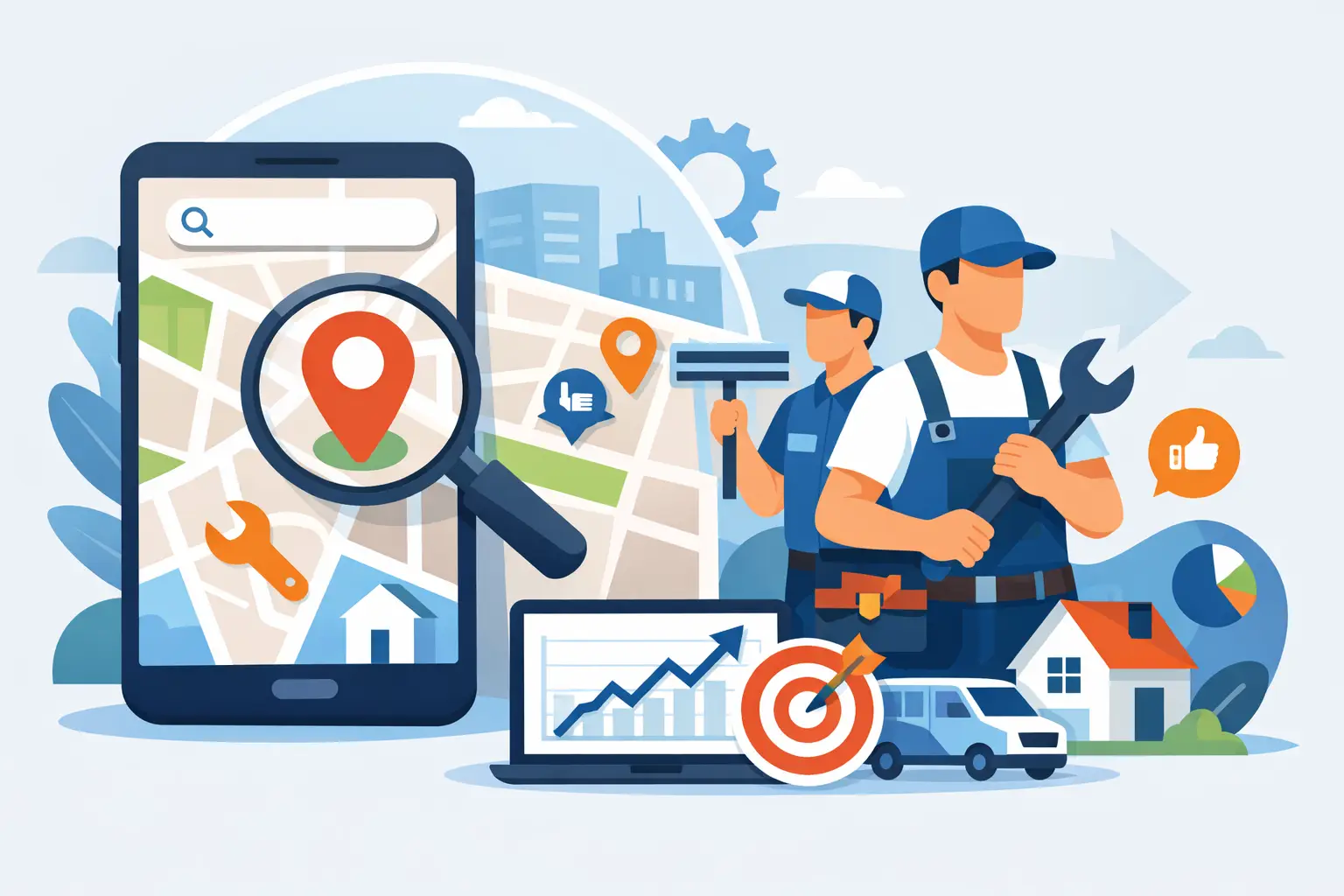
A homeowner with a burst pipe, a business owner looking for a commercial electrician, or a parent searching for a nearby therapist is not browsing for inspiration. They are looking for a trusted provider who can solve a problem now. Local SEO for service businesses puts your company in front of those high-intent customers at the exact moment they are ready to call, request a quote, or book an appointment.
For service companies, local visibility is not a vanity metric. It is a lead-generation system. When your business appears prominently in local search results with a credible profile, clear service information, strong reviews, and a conversion-ready website, more of the right prospects find their way to your team.
Why Local Search Is Different for Service Businesses
A national e-commerce brand can compete on product selection, price, and shipping. A service business competes on proximity, trust, availability, and proof of quality. Search engines need confidence that your company is relevant to the search, operates in the area, and delivers a legitimate customer experience.
That is why ranking for a broad term such as “plumber” is rarely the goal. Ranking when someone searches “emergency plumber in Houston,” “roof repair near me,” or “business attorney in Sugar Land” is where opportunity becomes revenue. The searches may have lower volume than broad keywords, but the intent is far stronger.
Local results are also dynamic. A customer searching from downtown Houston may see a different set of map listings than one searching from Katy. Your visibility can vary by location, service category, competition, and the strength of your digital presence. A smart strategy accounts for that reality instead of promising one ranking that tells only part of the story.
Start With a Google Business Profile That Earns Trust
Your Google Business Profile is often the first impression a local customer gets of your company. It can display your phone number, hours, reviews, photos, service areas, updates, and route information before a prospect even reaches your website. An incomplete or inconsistent profile gives competitors an easy opening.
Claim and verify the profile, then build it out with the same care you would give a storefront or sales presentation. Use your real business name, select the most precise primary category available, add relevant secondary categories, write a clear business description, and keep business hours current. Choose the correct business model as well. Businesses that serve customers at their location should show an accurate address. Service-area businesses that travel to customers can hide their address and define genuine service areas.
Do not use virtual offices, keyword-stuffed names, or locations where your business is not staffed. These shortcuts can create short-term confusion and long-term visibility problems. Search platforms are designed to surface real local businesses, and accuracy is an asset.
Photos matter because local buyers want evidence. Show your team, vehicles, completed work, office or shop, and recognizable details that make the business feel established. For professional services, polished staff photos and office imagery can reinforce credibility. For home services, before-and-after project images often do the same.
Build Service Pages Around How Customers Search
Your website must carry the conversation forward after a prospect clicks. A generic services page with a long list of offerings is rarely enough. Create focused pages for core services, each explaining what you do, who it helps, what the process looks like, and how to take the next step.
A HVAC company might need distinct pages for AC repair, installation, maintenance, and commercial HVAC. A law firm may need pages for family law, estate planning, business law, and litigation. The page should answer the questions a buyer is already asking, not merely repeat a keyword.
Location pages can be powerful when they reflect a real market and offer useful, location-specific value. If you serve Houston, The Woodlands, Cypress, and Pearland, pages for those markets may make sense. But creating dozens of near-identical city pages with only the city name changed is thin content, not a growth strategy.
The stronger approach is to connect your service expertise to the local customer need. Mention the types of projects you handle in that area, practical considerations customers face, neighborhoods or industries you serve where appropriate, and clear ways to contact your team. Every page should earn its place on the site.
Make Reviews Part of Your Operating System
Reviews influence both local visibility and conversion. A prospect comparing three providers may never call the business with the fewest reviews, the oldest reviews, or no response to negative feedback. Reviews signal that your company is active, accountable, and trusted by people in the community.
Build a consistent review-request process into the customer journey. Ask after a successful job, completed appointment, resolved support issue, or positive project milestone. The timing matters. A simple request while the experience is fresh will outperform an occasional campaign sent months later.
Avoid offering incentives in exchange for positive reviews or pressuring customers on what to say. Ask for honest feedback. Then respond professionally to every review you reasonably can. Thank positive reviewers with a specific, human response. Handle negative feedback with calm ownership, a willingness to resolve the issue, and no public argument.
A thoughtful response is not just customer service. It is visible proof of how your business operates when something does not go perfectly.
Keep Your Local Business Information Consistent
Your name, address, and phone number should be accurate everywhere customers encounter your brand. That includes your website, major map platforms, social profiles, industry directories, and local business listings. Inconsistencies create friction for customers and uncertainty for search engines.
This does not mean chasing every directory on the internet. Quality and relevance matter more than volume. Prioritize the platforms your customers use, credible industry directories, and local organizations that make sense for your business. A contractor may benefit from construction and home-service listings. A healthcare provider, financial advisor, or legal firm will have a different mix of relevant sources.
Your website should also make contact details easy to find. Place a clickable phone number prominently on mobile, include a clear contact page, and make it simple for visitors to request a quote or schedule a consultation. Local traffic is valuable only when your website turns attention into action.
Local SEO for Service Businesses Requires Conversion Thinking
Traffic is not the finish line. A service business can improve rankings and still leave leads on the table if the site feels dated, loads slowly, buries its calls to action, or gives prospects no reason to choose it.
Every key service page should make the next step obvious. That might be calling for emergency service, requesting an estimate, booking an appointment, or starting a consultation. Use direct language and reduce unnecessary form fields. If your sales process requires qualification, ask for the essentials first, then let your team take over.
Trust elements should support the decision without overwhelming the page. Relevant certifications, years in business, project examples, customer testimonials, service guarantees, and financing information can all help when they are truthful and easy to verify. What matters most depends on your category. An emergency restoration company may need to emphasize response time, while a B2B consulting firm may need to demonstrate expertise and outcomes.
Measure the Signals That Connect to Revenue
Local SEO should be managed with accountability. Monitor rankings and visibility, but do not stop there. Track calls, form submissions, booked appointments, direction requests, and qualified leads. Where possible, connect leads to closed revenue so you can see which services, locations, and campaigns actually produce growth.
Not every lead has the same value. A commercial remodeling inquiry may be worth far more than a small repair request. A strong reporting process separates raw activity from meaningful business results, helping you invest in the work that delivers the best return.
Local performance also takes time. Technical fixes and profile improvements can create early movement, while competitive service terms and established markets often require sustained content, review, and authority-building work. The right expectation is progress backed by data, not a quick ranking promise that disappears after a month.
Your local market is full of customers already looking for the service you provide. Give them a business profile they can trust, a website built to convert, and a clear reason to choose you. When you are ready to turn local search into a more accountable source of leads, WiseX3 can help move your digital presence from scattered effort to measurable action.
By Calixto Armas